



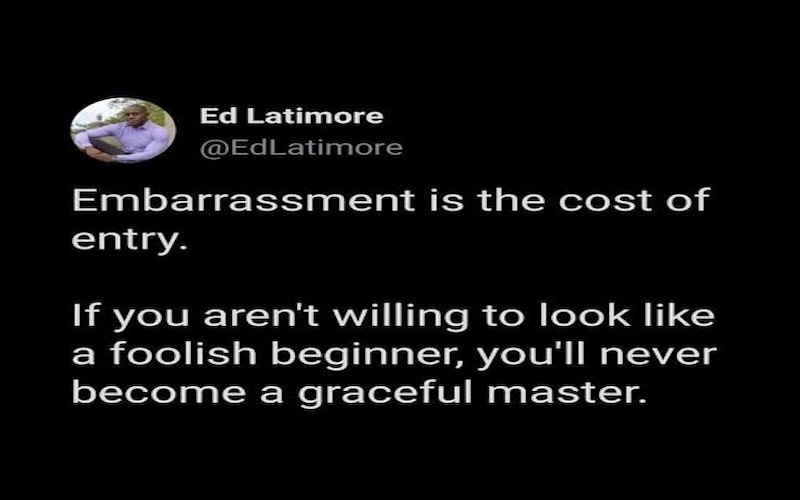
Nobody wants to be called a beginner.
A beginner asks too many questions. They hesitate before making decisions. They are slower than everyone else in the room. They don’t know the shortcuts, the jargon, or where the invisible doors are.
In business, being a beginner can feel almost embarrassing. We admire businesses that look established. We celebrate founders who appear to have everything figured out. Confidence has become part of the brand.
But every business you admire today was once run by someone who didn’t know what they were doing…not completely, anyway.
There is something wonderfully honest about beginnings. They strip away the illusion that success arrives fully formed because it in fact doesn’t. It arrives awkwardly and usually disguised as uncertainty.
For many SMEs, the beginning is not glamorous. It is opening a shop with just enough stock to fill half the shelves. It is making deliveries yourself because hiring a driver isn’t yet an option. It is printing business cards before you’ve had your first client. It is standing behind a market stall hoping today will be better than yesterday.
Somewhere along the way, many entrepreneurs convince themselves that they must first feel ready before taking the next step.
“I’ll approach that corporate client when our systems are better.”
“I’ll hire when revenue is more predictable.”
“I’ll expand when I’m more confident.”
The problem is that confidence has never been particularly interested in arriving first. It prefers to show up after you’ve already done the difficult thing. Most of what we call confidence is simply accumulated evidence. Evidence that you survived the last challenge, figured something out and that the world didn’t end after your first failed proposal, your first difficult customer, or your first expensive mistake.
The beginner understands something the expert sometimes forgets and this is that there is still something to learn. Perhaps that’s why small businesses often surprise us.
A food processor changes their packaging because customers at the local market say the labels are difficult to read. A café owner notices people lingering longer on Saturdays and quietly changes operating hours. A young agribusiness discovers that farmers value reliability more than polished presentations.
Beginners simply pay attention.They listen because they have to… as it turns out, it is one of the most underrated business strategies. The businesses that endure are not always the ones that started with the most money, more often, they are the ones that stayed curious long enough to understand what their customers actually needed.
Being a beginner gives you permission to get things wrong without breaking everything. You can adjust your pricing, change your supplier, refine your product and improve your customer service with minor disruptions to the business.
Growth is often celebrated as speed, but sustainable businesses rarely grow that way. They grow like trees, strengthening the invisible parts that no one notices before stretching into places everyone can see.
Even then, every new stage makes you a beginner again. Your first employee. Your first large client.Your first export order.Your first investor meeting. Your first branch in another county. Your first event in a new location.
Each milestone asks the same question in a different way: Are you willing to be new at this again?
The entrepreneurs who keep growing are the ones who stop waiting for uncertainty to disappear. Perhaps that is the real work of building a business. Not becoming someone who knows everything. But becoming someone who is comfortable being a learner.
The ancient philosopher Lao Tzu wrote that “the journey of a thousand miles begins with a single step.”
We often quote those words because they sound inspiring but we must appreciate what they imply. The first step is taken by someone who has never walked that road before.
A beginner.
What are you willing to be a beginner at next?


Leave a Reply